
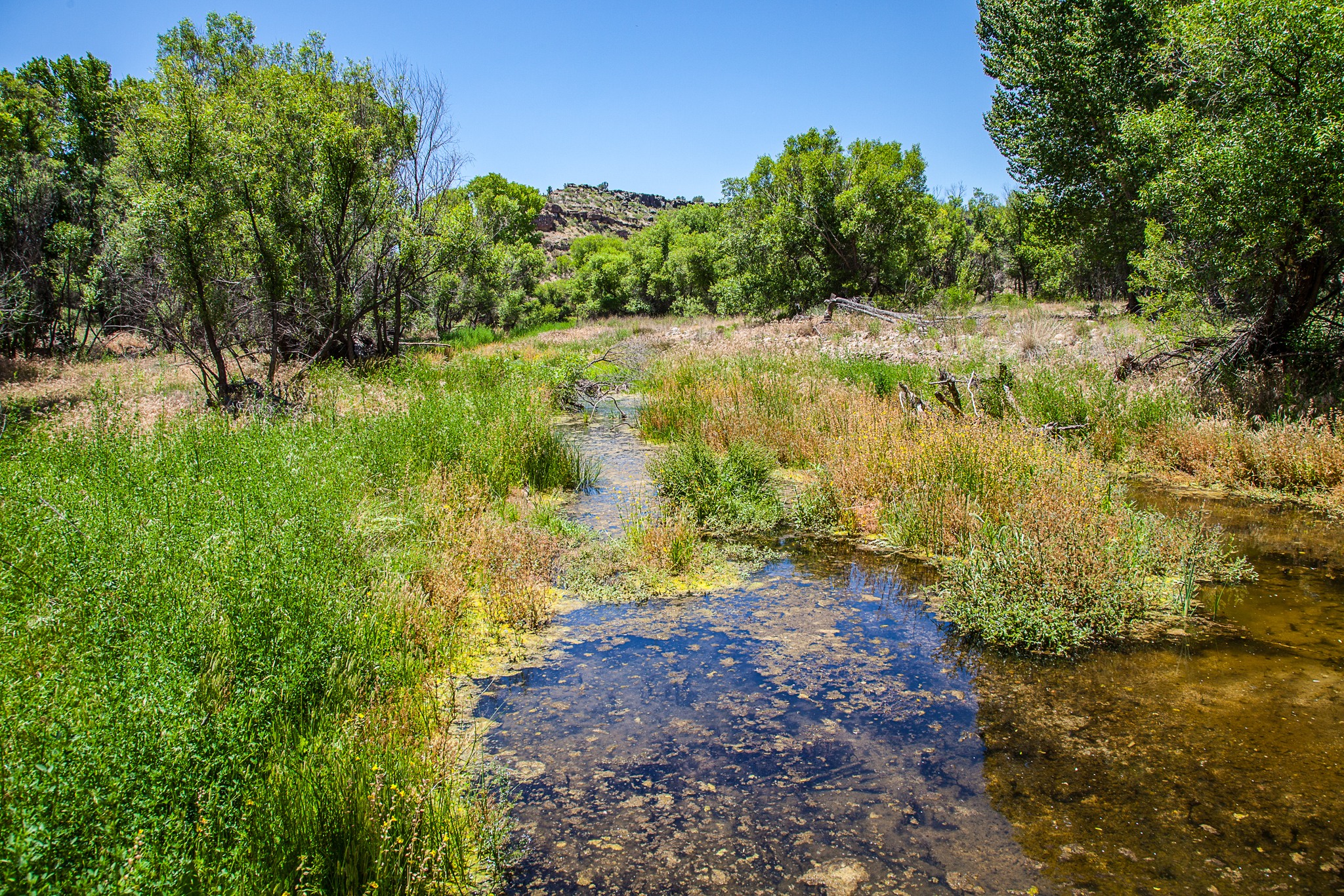
The Verde River’s water quality is very good…most of the time, and in most places. There are exceptions, of course, but they are infrequent and dispersed.
First, let’s talk about how we measure water quality and what constitutes poor water quality. The Verde River Institute has conducted over 1350 water quality assessments in the last 7 years, and the vast majority of them indicate very safe water. Water samples are gathered by a drone that dips collection bottles into the river at several different sites in the Verde Valley. This allows us to gather more samples far more frequently than has ever been done before. It also lets us take samples at times and in places that were impractical before.
Samples are tested for water temperature, pH, turbidity (cloudiness), total dissolved solids (TDS), phosphorus, oxygen and pathogens, specifically E. coli. These sampling parameters help us understand the water’s quality, how it may be changing, and where and when it becomes a public health or ecological concern.
We’ve learned a lot in 7 years, like what qualities are related to others. For instance, water temperature correlates best with air temperature. Dissolved oxygen also relates to temperature, turbidity, TDS, time of day, and weather. Pathogen levels fluctuate dramatically and are related to time of year, temperature, turbidity, flow levels, and location. We sample only E. coli since it’s easily evaluated in small labs and generally requires the same conditions as other pathogens like Cryptosporidium and Giardia.
E. coli is a bacterium that grows in the gut of warm-blooded animals, including humans. It’s a problem when it gets in the water and people consume it. The bacteria are always there, but usually in such small numbers that they’re no threat. They hibernate in mud at the bottom of the river while the water is calm and cool, but when the river warms and floods stir it up, it can be a problem. The most common correlation with E. coli is turbidity because mud and bacteria are stirred up by flash floods, especially during monsoons. The first monsoon floods are generally the worst, but as they continue, pathogens usually become less of a problem, since they’re flushed out by previous floods. E. coli can also be a problem where livestock, especially cattle, are near the river. Cattle and other mammals’ excrement around the river gets washed into the water, causing peaks in the E. coli. Malfunctioning septic systems are also a concern when they are near the river.
Other water quality parameters can also cause problems for the ecosystem. Oxygen levels can change depending on water temperature, stagnation, rotting vegetation and other factors. If the oxygen falls too low, fish and other aquatic animals have a hard time. Dissolved solids in the Verde are usually from limestone dissolved in the water. Springs that originate in limestone often have very high TDS, as do stagnant ponds where evaporation has concentrated salts. Fish and aquatic animals’ gills can’t extract oxygen from water with extremely high TDS.
We have never determined that problems with any of these water quality parameters are associated with slag piles along the river.
Today, the Verde River is very clean, but be careful during the early monsoon floods, when the water is muddy, and near pastures or poor septic systems. Ecologically, the river’s quality is better than it has been in a hundred years. We can thank the EPA and the Arizona Department of Environmental Quality (ADEQ), and conservation organizations like Friends of the Verde, the Verde River Institute, The Nature Conservancy, and the Sierra Club for that!
This article was first published in the Verde Independent as one of a series of articles entitled “Verde River Reflections,” by Doug Von Gausig


