
Understanding SB1611:
Yavapai County and Verde Valley residents, particularly those in Camp Verde, where agriculture is a cornerstone of our community, you may have heard about Arizona’s Senate Bill 1611 (SB1611), signed into law on June 30, 2025.
This “Ag-to-Urban” water conservation program aims to address Arizona’s groundwater challenges while supporting housing growth.
But what does it mean for our local farmers, especially in Camp Verde, where lush farmlands rely heavily on water?
Let’s break it down.
Arizona’s Water Landscape: Agriculture vs. Residential Use
In Arizona, agriculture consumes about 74% of the state’s water supply, while municipal use, including residential homes, accounts for roughly 20%.
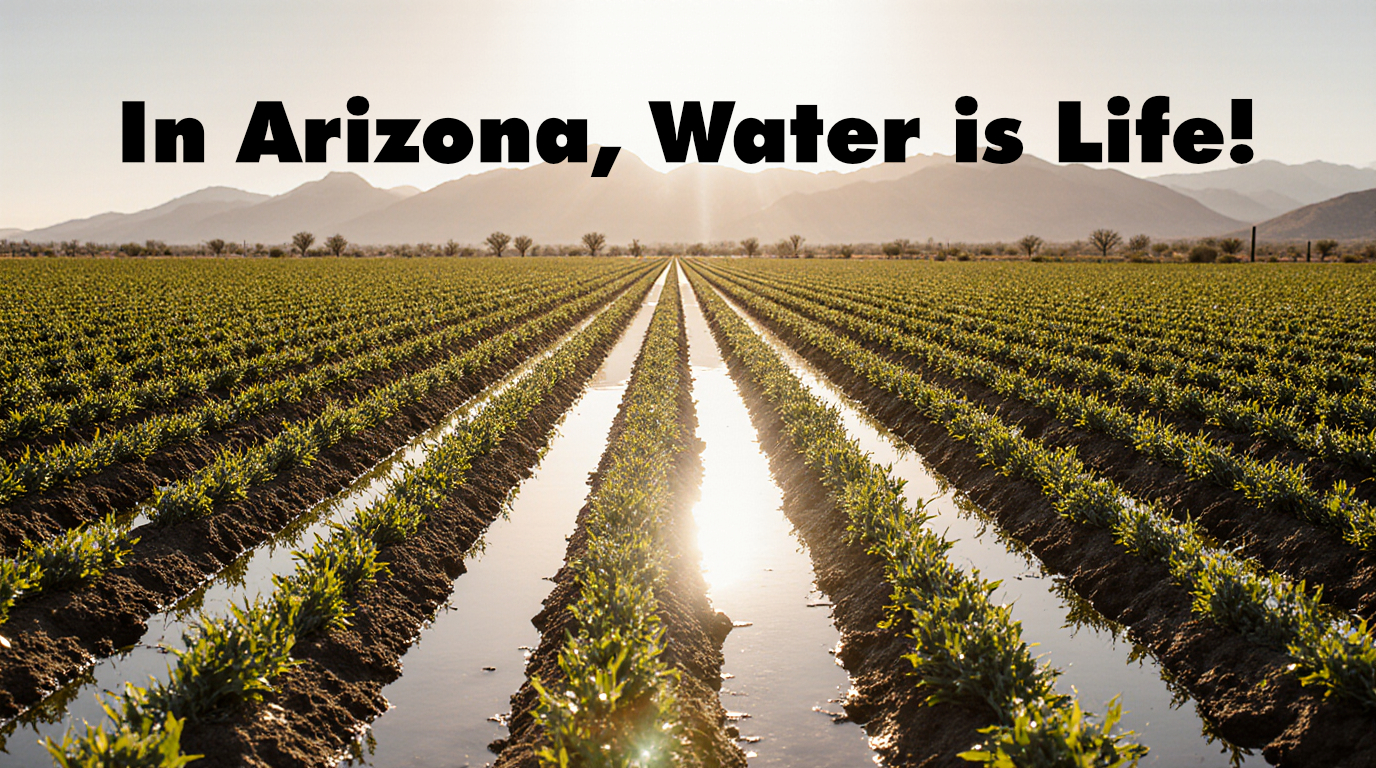
Here in Yavapai County and the Verde Valley, our farms—think of the vibrant fields around Camp Verde—use significant groundwater to grow crops like alfalfa, corn, and pecans.
This high water demand contrasts with the relatively lower usage of households, where the average Arizonan uses about 146 gallons per day, much of it for indoor needs or modest landscaping.
SB1611, effective September 26, 2025, introduces a voluntary program that could reshape this dynamic, particularly in areas like the Phoenix and Pinal Active Management Areas (AMAs).
While Camp Verde lies outside these AMAs, in the Verde River watershed, the bill’s ripple effects could influence our local farming community. Here’s how.
What is SB1611?
SB1611 allows farmers with irrigation grandfathered rights (IGFRs) in the Phoenix and Pinal AMAs to permanently retire their farmland’s water rights in exchange for “groundwater savings credits.”
These credits can be used by developers to meet the 100-year Assured Water Supply (AWS) requirement for new subdivisions, bypassing the need to prove physical groundwater availability.
The program incentivizes converting high-water-use agricultural land to urban developments, which use significantly less water—about 1.5 acre-feet per acre in Phoenix or 1 acre-foot in Pinal, compared to agriculture’s 3 acre-feet per acre.
The Arizona Department of Water Resources (ADWR) projects that this could save nearly 10 million acre-feet of groundwater over the program’s lifetime, supporting up to a million new homes while addressing Arizona’s housing shortage.
The catch? The program is limited to Phoenix and Pinal AMAs, with credits needing to be pledged by December 31, 2030, and the program sunsetting after 2035.
Today we celebrated a huge water policy win. SB1611—our bipartisan Ag-to-Urban water legislation—marks a major step toward securing Arizona’s water, lowering housing costs, and growing our economy.
— Governor Katie Hobbs (@GovernorHobbs) July 29, 2025
Thank you to the advocates, lawmakers, and community leaders who worked… pic.twitter.com/tKdtn8ZWH0
How Does This Affect Camp Verde Farmers?
At first glance, SB1611 doesn’t directly apply to Camp Verde, as we’re outside the Phoenix and Pinal AMAs. Our region, part of the Verde Valley, operates under different water management rules, relying on a mix of groundwater, surface water from the Verde River, and ditch irrigation systems for agriculture.
However, the bill’s broader implications could still touch our community in several ways:
- Market Pressures on Farmland: While SB1611 targets Phoenix and Pinal, its success could inspire similar programs elsewhere, including Yavapai County. Developers eyeing Camp Verde’s open land might pressure farmers to sell or lease water rights if similar mechanisms are proposed locally. This could raise land values, making it tempting—but costly—for farmers to stay in agriculture.
- Water Conservation Spotlight: SB1611 highlights Arizona’s push to reduce groundwater use, especially in agriculture, which uses three to four times more water than residential areas. Camp Verde farmers may face growing scrutiny to adopt water-saving practices, like drip irrigation or crop rotation, to align with statewide conservation goals. This could mean new costs for equipment or training but also opportunities for grants or incentives.
- Regional Water Dynamics: The Verde River, a lifeline for Camp Verde’s agriculture, is already stretched by competing demands. If urban growth accelerates in nearby AMAs due to SB1611, it could indirectly strain regional water resources, as groundwater and surface water systems are interconnected. Farmers might see tighter regulations or reduced water allocations in the future.
- Economic Opportunities and Risks: For farmers considering retirement or diversification, SB1611’s model could foreshadow future programs offering financial incentives to retire water-intensive crops. However, this comes with risks—losing water rights could limit future farming flexibility, especially for younger farmers or those wanting to expand.
What Can Camp Verde Farmers Do?
- Stay Informed: Engage with ADWR’s public session on September 18, 2025 (email questions to [email protected]). While SB1611 is AMA-specific, understanding its framework can prepare you for potential local policy changes. Visit www.azwater.gov for updates and data dashboards.
- Explore Conservation Options: Look into water-efficient technologies or crops suited to our arid climate. Programs like the USDA’s Natural Resources Conservation Service offer support for sustainable practices.
- Advocate Locally: Join or form coalitions with other Verde Valley farmers to ensure your voice is heard in regional water planning. The bill’s critics, including rural advocates, argue it overlooks communities like ours—your input can shape future policies.
- Monitor Land Use Trends: Keep an eye on development pressures in Yavapai County. If urban sprawl creeps closer, understanding your water rights and land value will be crucial.
The Bigger Picture
SB1611 is a step toward balancing Arizona’s growth with water conservation, but it’s not without controversy. Critics argue it prioritizes developers over long-term water security and lacks community engagement, especially for rural areas like Camp Verde.
For our farmers, the bill is a reminder of the delicate balance between agriculture’s heritage and Arizona’s urban future. By staying proactive, you can help ensure that Camp Verde’s fields remain green and productive for generations to come.
Have thoughts or concerns about SB1611? Share them with your local agricultural organizations or reach out to Yavapai County officials. Together, we can navigate this changing landscape.


